Research
Questions?
PhilUgradOffice@uwo.caUndergraduate Program Coordinator
Forough Hazrati
Undergraduate Program Chair
Anthony Skelton
Faculty of Arts Academic Counseling
519-661-3043
Academic Advising Support Portal
Recent Faculty Research
Jasmine Gunkel Receives SSHRC Funding for Research on AI and Human Intimacy
|
|
Professor Jasmine Gunkel has been awarded a $76,329 SSHRC Insight Development Grant from the Social Sciences and Humanities Research Council of Canada (SSHRC) for her project, "Pseudointimacy, AI, and Why Intimacy Matters" As artificial intelligence becomes increasingly integrated into our daily lives, how might it change the way we form relationships and experience intimacy? Gunkel's research explores the philosophical questions surrounding AI-meditated connections, examining what makes intimacy meaningful and why genuine human connection matters in an increasingly digital world. This SSHRC-funded project contributes to important conversations about technology, relationships, and the future of human interaction. |

Where Art Meets Philosophy: Helen Fielding Co-Edits New Book on World Making
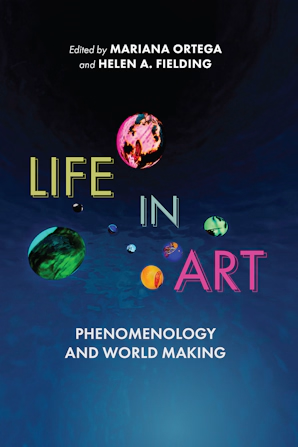
New Book: Life in Art: Phenomenology and World Making
|
|
How does art shape the way we experience and understand the world? Professor Helen Fielding, together with Mariana Ortega, explores this fascinating intersection in their co-edited volume, Life in Art: Phenomenology and World Making, published by Indiana University Press. The collection invites readers to reconsider the role of creativity in how we make sense of our world. |
Can AI Make Healthcare Fairer? New Research Reveals a Surprising Paradox
What if an AI system designed to make healthcare fairer actually makes inequalities worse over time?
In their research paper, Fairness Over Time: Evaluating How Fairness Objectives Shape Health Disparities in AI-Driven Clinical Decision Support Systems, Alice C.W. Huang, alongside Kaitlyn E. Wade and Daniel J. Lizotte, investigates how different definitions of fairness influence healthcare decisions and long-term patient outcomes.
Using a simulation of chronic disease management, the researchers compared five ethical approaches to allocating healthcare resources. Their findings reveal a striking challenge: some approaches intended to promote equality can actually produce greater disparities over time, particularly when existing barriers to healthcare access remain unaddressed.
The study highlights why evaluating AI fairness requires looking beyond individual decisions to consider their cumulative effects—and why ethical principles matter when designing technologies that influence patient care.
How Much Can Science Really Tell Us About Reality?
Lecture: “No Only to Anti-Realism”: Some Skeptical Thoughts on Scientific Realism
Does scientific success mean our theories accurately describe reality? Professor Wayne Myrvold tackled this enduring philosophical question in the prestigious Adolf Grünbaum Memorial Lecture at the University of Pittsburgh's Center for Philosophy of Science in March 2026. His presentation explored scientific realism and the challenges of understanding what scientific theories reveal about the world.
Revisiting the Thinkers Who Shaped German Philosophy
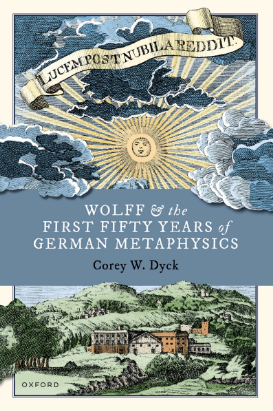
New Book: Wolff and the First Fifty Years of German Metaphysics
|
|
How did German philosophy develop into one of the most influential traditions in intellectual history? In Wolff and the First Fifty Years of German Metaphysics, published by Oxford University Press, Professor Corey W. Dyck examines the philosophical contributions of Christian Wolff and the development of German metaphysical thought. His work sheds new light on a formative period in the history of philosophy. |